Recently, thin plastic film bags have become a major target for environmental advocacy groups in the United States, who view their widespread distribution at thousands of checkout counters as incredibly wasteful. Labeled as an environmental nuisance, these bags have faced outright bans or strict limitations in numerous jurisdictions.
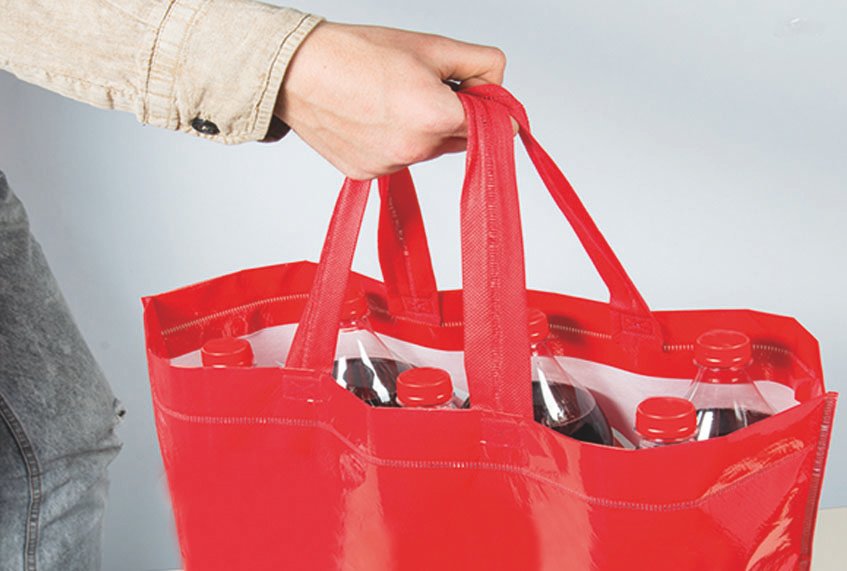
This shift has sparked a growing demand for more durable grocery bags that can withstand repeated use. While cloth bags have surged in popularity, the low cost of nonwoven polypropylene fabric has made it the go-to material for affordable reusable bags.
However, studies reveal that these alternatives come with their own set of challenges:
Cross-contamination: Reusability turns these bags into potential vectors for bacteria.
The Human Factor: A large number of consumers simply forget or choose not to reuse them.
Testing the Limits: Do They Actually Last?
While most carryout bag legislation officially classifies these nonwoven polypropylene totes as “reusable,” there is surprisingly little data on their actual real-world durability.
To test how they hold up against everyday wear and tear, researchers conducted a study on nonwoven polypropylene bags using two distinct methods:
The Real-World Simulation: 40 bags were packed with actual groceries and subjected to 125 to 175 repetitions of a 125-foot walking test. To see if cleanliness impacts longevity, half of these bags were machine-washed after every 25 repetitions.
The Stress Test: Another 80 bags underwent the mechanically assisted ATP-001 test protocol—a standard proposed by the Los Angeles County Department of Public Works as an alternative to grueling physical walking tests. Again, half of this group was washed to monitor the effects on their lifespan.
The Findings: A Mixed Bag for Durability
The results highlighted a significant gap between official classification and real-world performance:
The Hand-Carried Group: Out of 20 unwashed, hand-carried bags, all 20 survived at least 50 uses. However, only 12 of them successfully made it to the 125-use milestone required by the strictest standards.
The Impact of Washing: Laundering the bags noticeably weakened them. While 23 out of 40 unwashed bags passed the durability tests, that number dropped to just 14 out of 40 for the bags that were washed.
By Jeremy Alan Diringer, Clemson University