At Netpak Ambalaj, we closely follow global developments that protect our environment and benefit nature. Among European nations, France has consistently stood out for its deep respect for the environment, frequently leveraging advancing technology to drive eco-friendly legislation.
For instance, France mandated that all new commercial buildings must feature green roofs, and famously banned supermarkets from throwing away unsold food. Its next major target? Eliminating the widespread use of harmful single-use plastic containers.
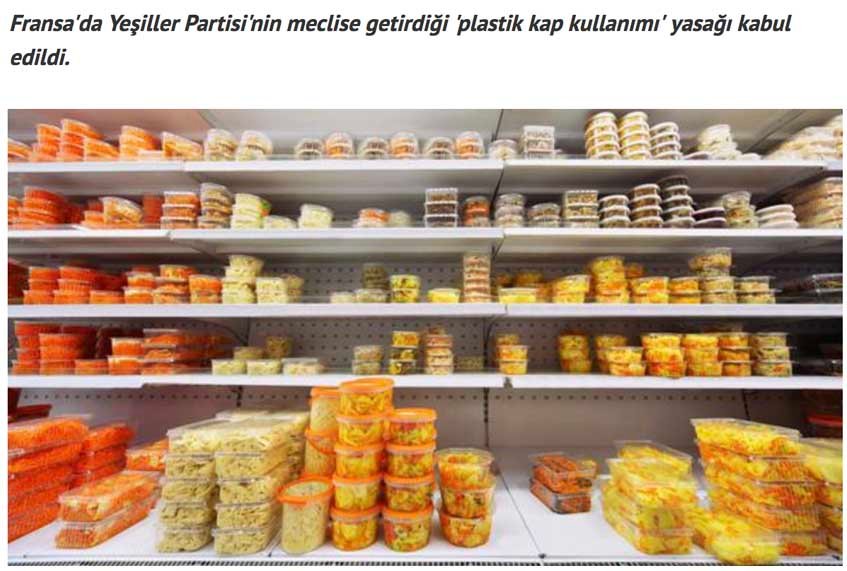
Banning Single-Use Plastics: The French Law
France introduced a groundbreaking proposal banning single-use plastic utensils, plates, knives, and spoons unless they are manufactured from bio-based, compostable raw materials. While environmentalists widely support this initiative to protect nature from plastic pollution, it faces pushback from critics who argue it conflicts with broader European Union trade standards.
To understand why this law is so critical, we only need to look at global production trends over the last 50 years:
Past Growth: Global plastic production has expanded 50-fold, exploding from 15 million tons to 311 million tons.
The 2050 Forecast: Production is projected to reach a staggering 1.1 billion tons—a catastrophic scenario for both wildlife and ecosystems.
The Single-Use Waste Trap: Roughly 95% of all plastic produced is used exclusively for single-use containers and packaging. This offers zero long-term economic value while causing immense, irreversible damage to our planet.
Even in France, which prides itself on sustainability, an astronomical 4.7 billion plastic cups are thrown away every year, and only 1% of them are currently recycled. Experts warn that if these strict bans are not implemented globally, the weight of plastic in our oceans will surpass the weight of all fish by the year 2050.
The True Cost of Plastic Production
The damage caused by global plastic manufacturing can be broken down into several critical factors:
1. Resource Mismanagement & Oil Consumption
Plastic is refined from crude oil. Today, plastic manufacturing consumes roughly 8% of global oil production. If current trends continue, plastic production will devour 20% of all global oil by 2050. Even if our individual usage remains steady, the skyrocketing global population means overall plastic consumption will still quadruple by mid-century.
2. Devastating Water Pollution
The amount of plastic waste entering our waterways is alarming:
Every single minute, the equivalent of one garbage truck full of plastic is dumped into our oceans.
This adds up to 8 million tons of plastic waste annually.
By the end of this decade, this pollution will result in a dangerous ratio of 1 ton of plastic for every 3 tons of fish in the ocean.
3. Inefficient Waste Management
Plastic packaging suffers from an incredibly low 5% effective recycling rate. The remaining waste is distributed poorly across the globe:
40% ends up buried in landfills.
32% is leaked directly into nature and oceans.
14% is incinerated for energy recovery, releasing emissions.
Corporate Responsibility: The Path Forward
Implementing rigid, sweeping bans like the ones in France can be highly challenging in countries where plastic reliance is deeply rooted. However, we do not need to wait for government mandates to make a difference. Corporations and enterprises can take immediate, simple actions to minimize plastic damage.
Instead of relying on plastic-derived packaging to extend food shelf life, businesses must transition toward healthier, eco-friendly alternatives. Embracing sustainable packaging solutions and durable, reusable cloth bags allows companies to reduce their ecological footprint while actively preserving the natural balance for generations to come.